 PawnEasy Pro
Pawn shops
A counter taking gold against small, short loans. The pledge wizard and the receipt are the whole job, and both work on a phone.
Home · Gold loan software
From the morning rate board to the redeemed bangle: how PawnEasy Pro values gold, works out what it is worth lending against it, and keeps the interest honest for the life of the loan.
Every gold loan starts with a number that changes daily. PawnEasy Pro keeps a rate board per karat — 24k, 22k, 18k and whatever else you lend against — and no valuation can be written until today's rate is on it. That is deliberate: a shop that values Monday's gold at Friday's rate is losing money quietly.
A karat rate prices that karat. The 22k rate you enter is what a gram of 22k is worth, not fine gold scaled down, so nothing is divided twice.
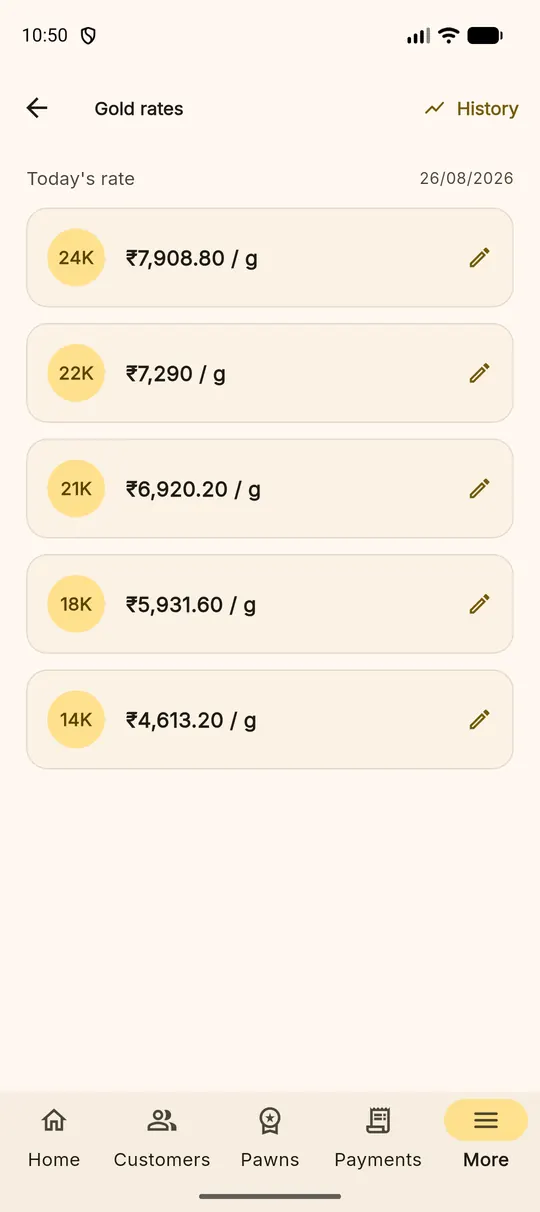
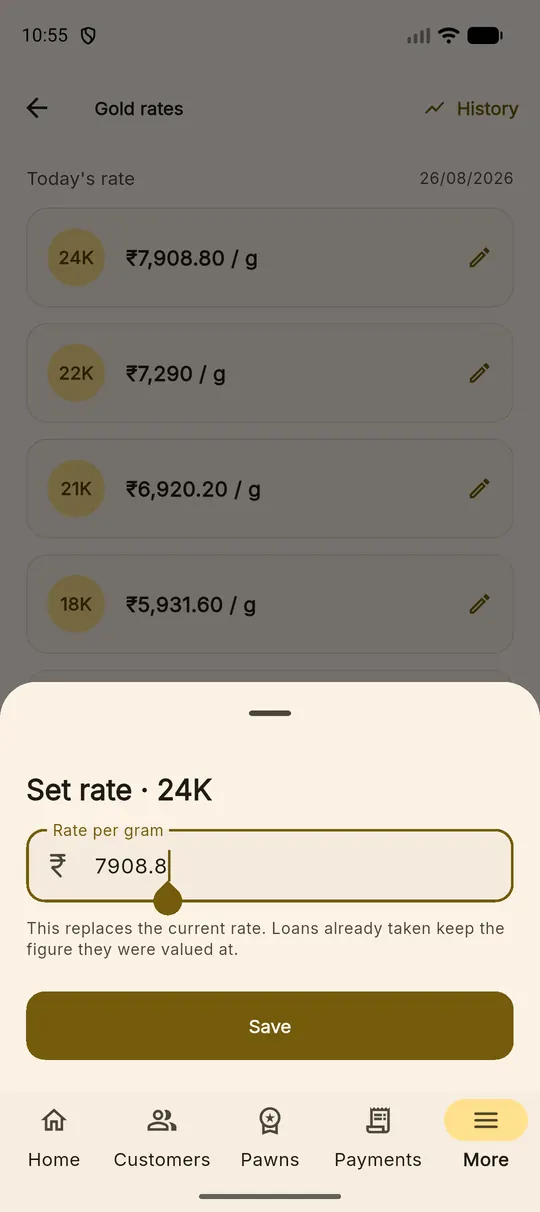
Rates are kept, not overwritten, so a loan written three months ago can still be explained by the rate that was on the board that morning.
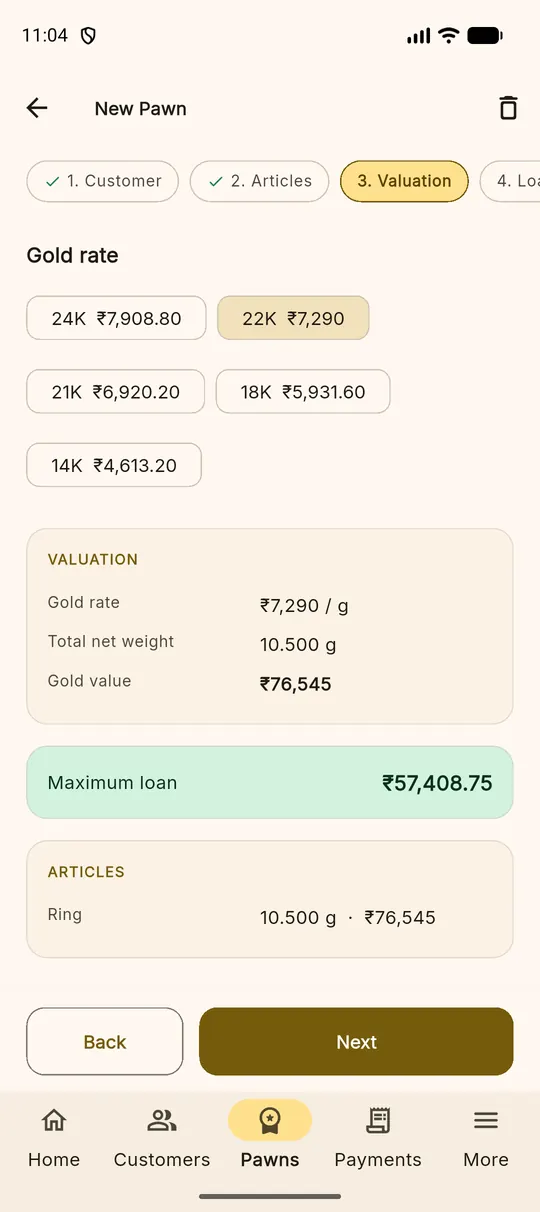
A bangle with stones does not weigh what the gold in it weighs. The valuation screen takes gross weight and the weight of stones and wastage, and the net weight is what it prices. Purity is chosen as a karat, and the loan-to-value percentage you lend at is applied on top.
So the chain runs: net weight × karat rate = gold value, and gold value × LTV = the maximum loan. Every one of those four numbers is on the screen while the customer is standing there, which is what makes the figure arguable in a good way — you can show them how it was reached.
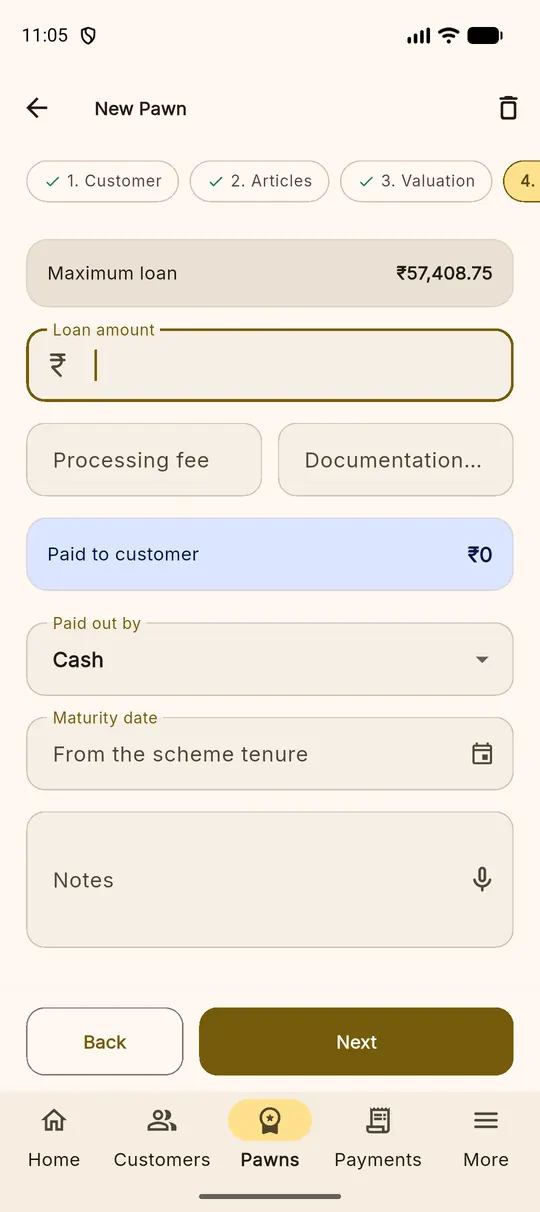
Set your schemes once — monthly, daily or flat, with a grace period and a penalty rate if you use one — and each loan takes a copy of the scheme it was written under. Change the scheme next year and every existing loan is untouched, because it is reading its own copy, not the live one. That is the difference between software you can audit and software you have to argue with.
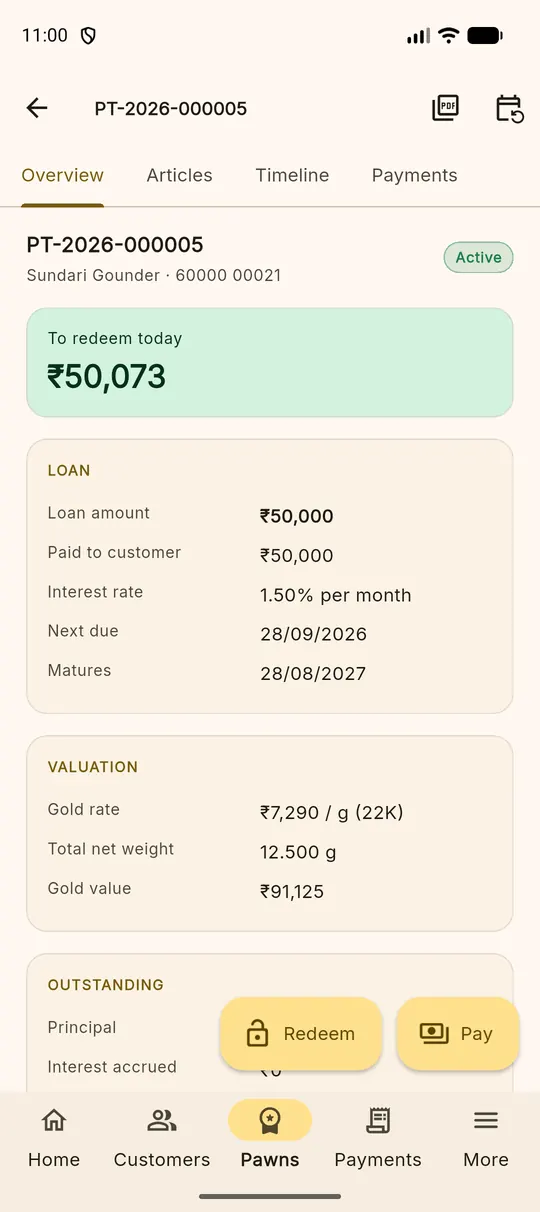
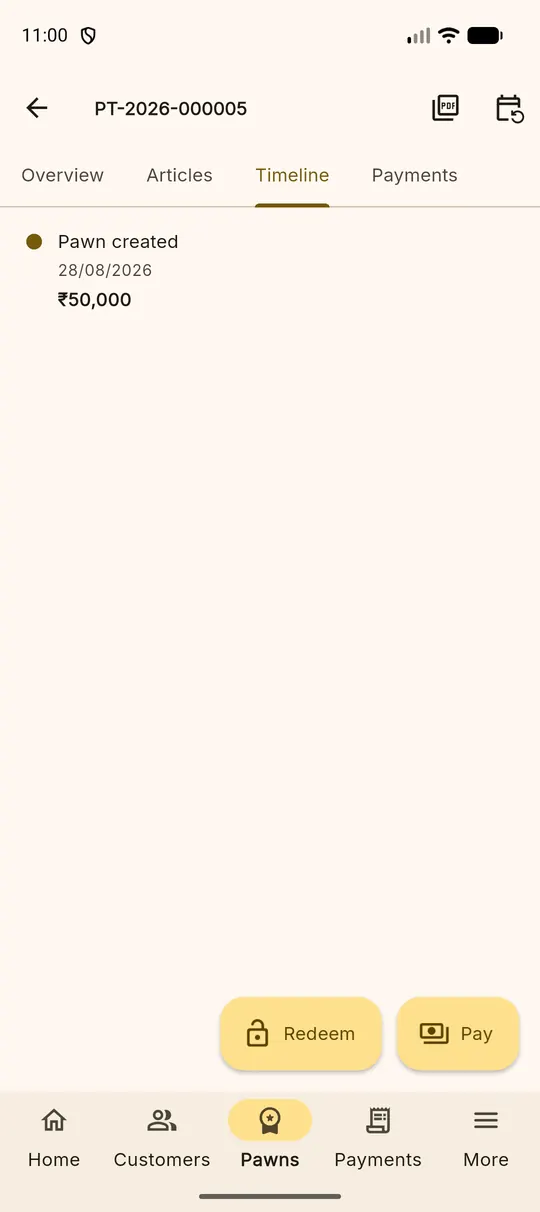
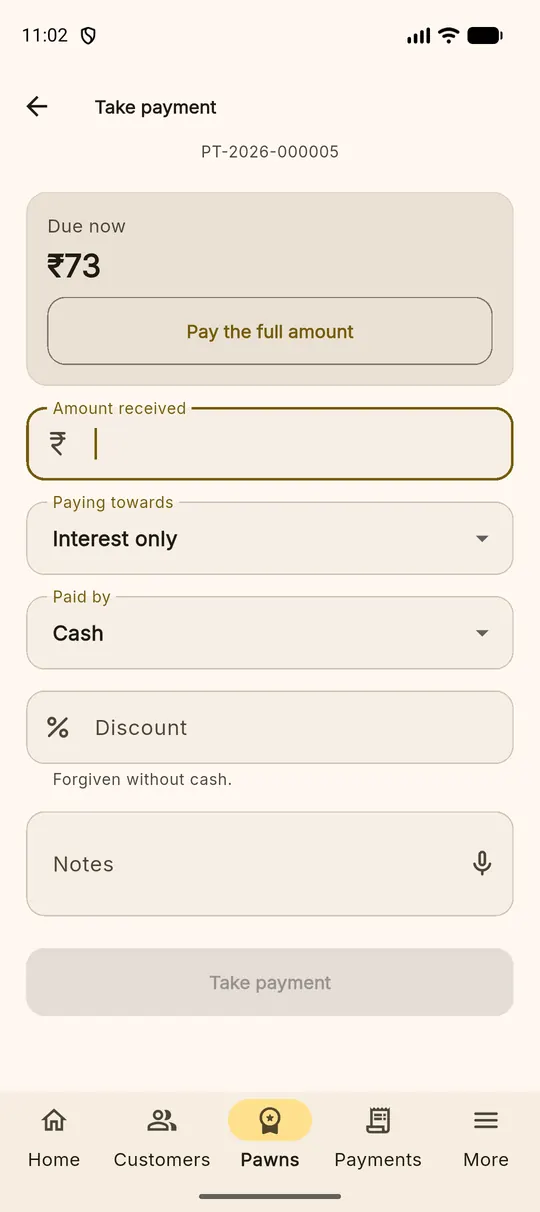
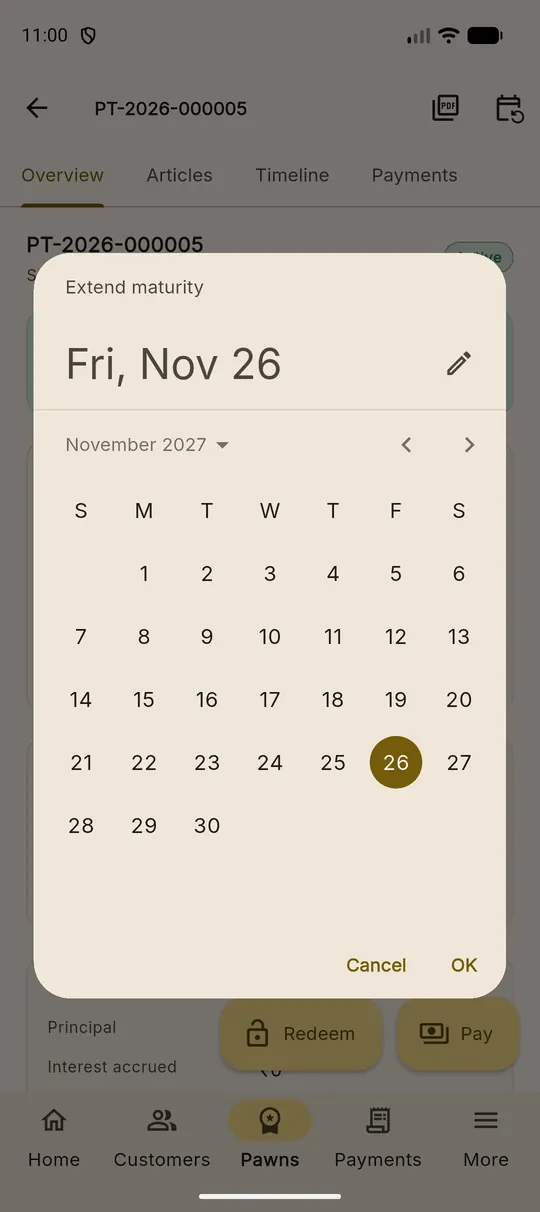
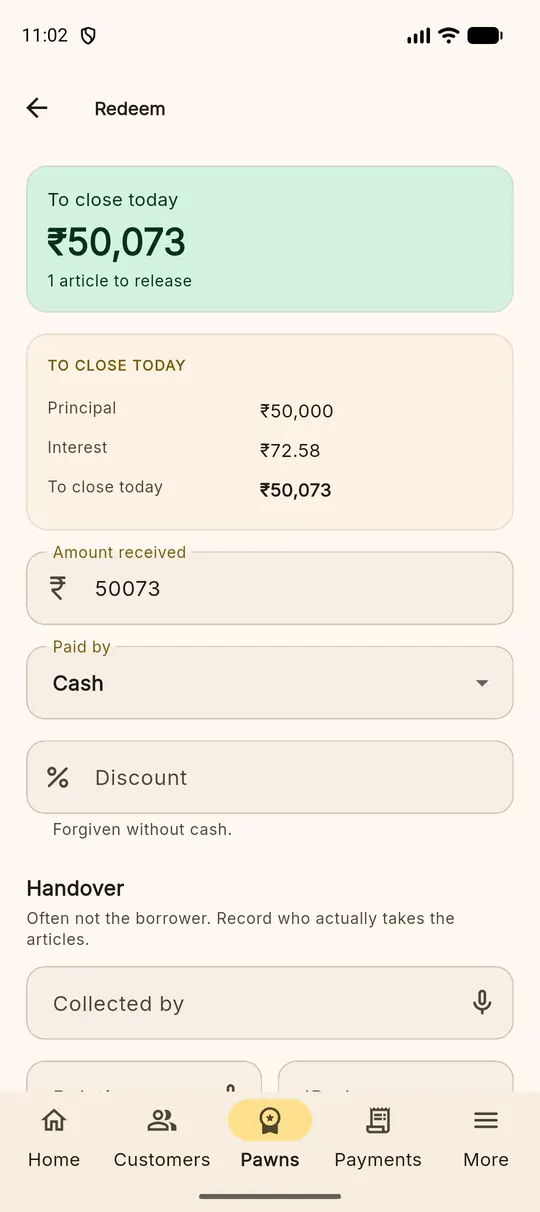
Customers rarely pay the way a spreadsheet expects. Take interest only, take part of the principal, take everything — the software allocates what you receive against interest first and then principal, and prints a numbered receipt for it. A renewal extends the loan and carries the accrued interest forward. A redemption closes the loan and releases the articles, and will not let you release gold that is still standing against money.
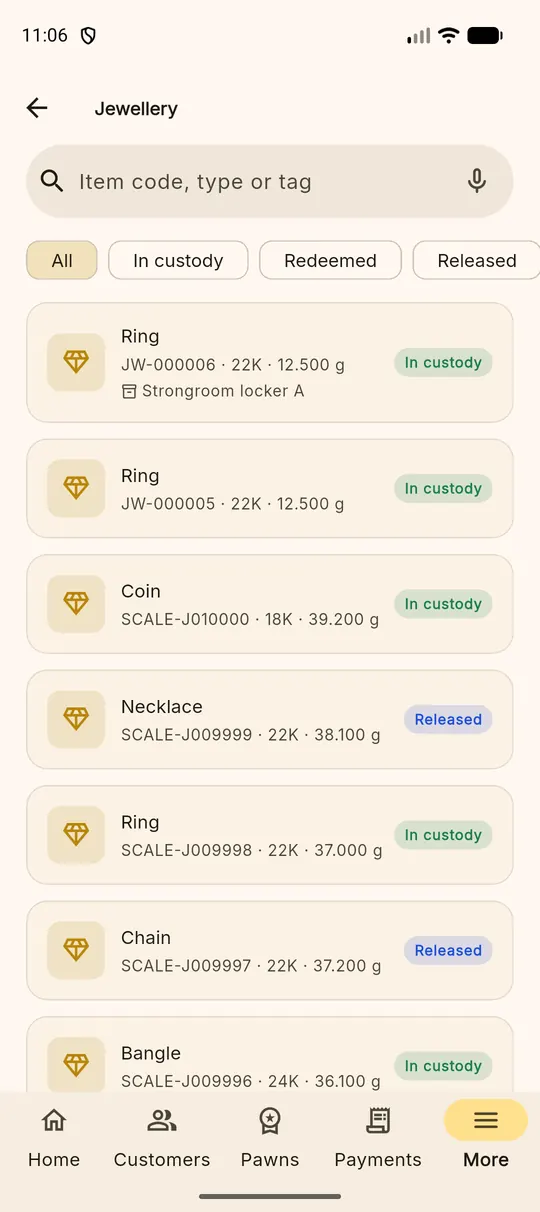
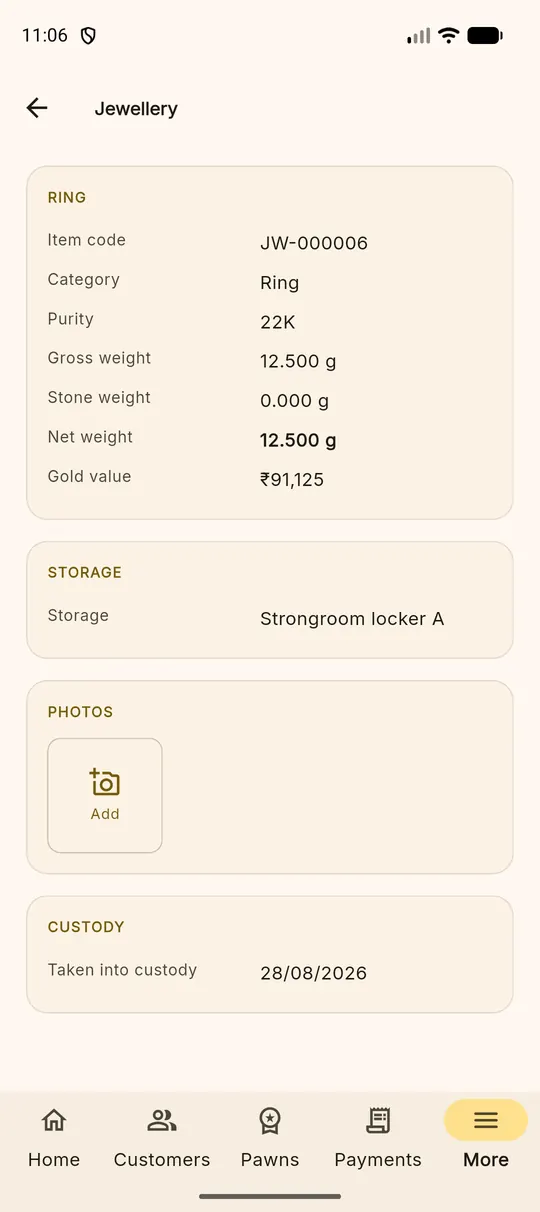
A loan is money; an article is a physical thing you are holding. Each chain, ring or bangle gets its own record with weight, karat and a code, and every move it makes — into the strongroom, into a locker, out at redemption — is written to an append-only custody trail. When a customer asks where their bangle is, the answer is a locker name, not a search of the safe.
KYC sits with the customer, not the loan: Aadhaar and PAN are encrypted before they are stored and never shown in full again — last four digits only, and only to staff you have given permission. More on that in how the data is held.
Who it is for
The same system, but the part that matters changes with the kind of business you are running.
A counter taking gold against small, short loans. The pledge wizard and the receipt are the whole job, and both work on a phone.
Lending against gold as the main line rather than a sideline — schemes per product, interest that accrues without anyone re-keying it.
Jewellery in, money out, item back on redemption. Every article is tracked on its own with weight, purity and a locker.
Branches, staff and roles, KYC you are obliged to hold, and a custody trail that settles a disagreement a year later.
A book big enough that overdue tracking and interest accrued matter more than any single loan does.
One shop, two or three staff, no IT department. One subscription, no per-user charge, and nothing to install on a server.
Also on this site
The workflow end to end: customer, pledge, article, loan, interest, payment, redemption.
The businessBranches, staff roles, KYC, the custody trail and reminders, for an Indian broking business.
The owner's viewPortfolio, overdues, interest accrued, strongroom capacity and the day book.
Fourteen days, every feature switched on, no card. Write one real pledge and see whether the interest matches your book.