 PawnEasy Pro
The reports hub
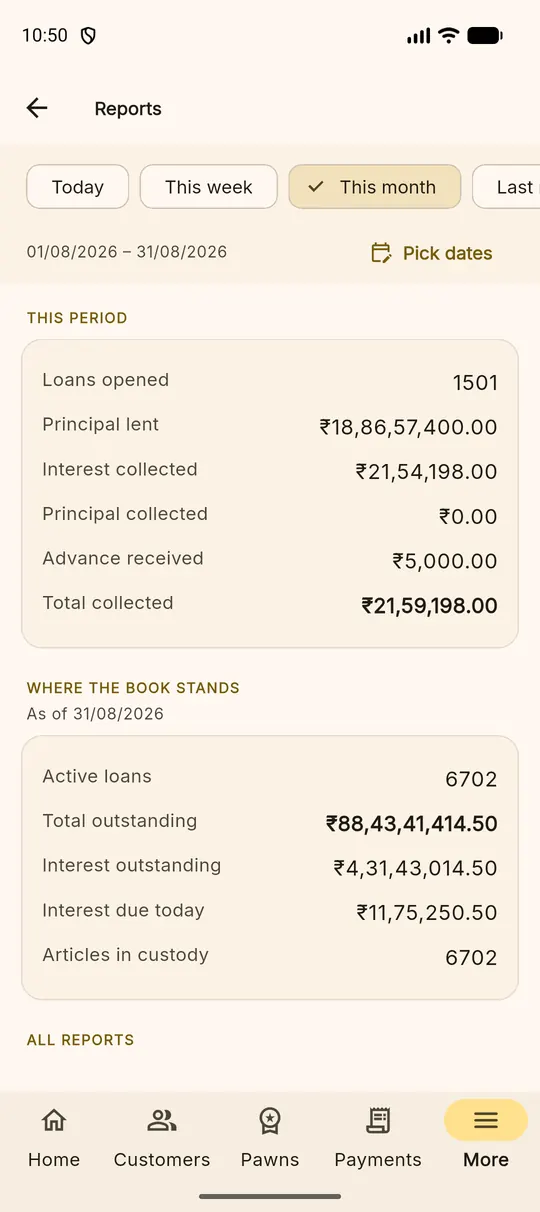
More ▸ Reports opens with two summaries before the reports themselves. This period counts what happened — loans opened, principal lent, interest collected, principal collected, advance received and the total collected. Where the book stands counts what is true right now — active loans, total outstanding, interest outstanding, interest due today and articles in custody.
Read those two at closing time, and open a report when a number in them surprises you.
Things every report shares
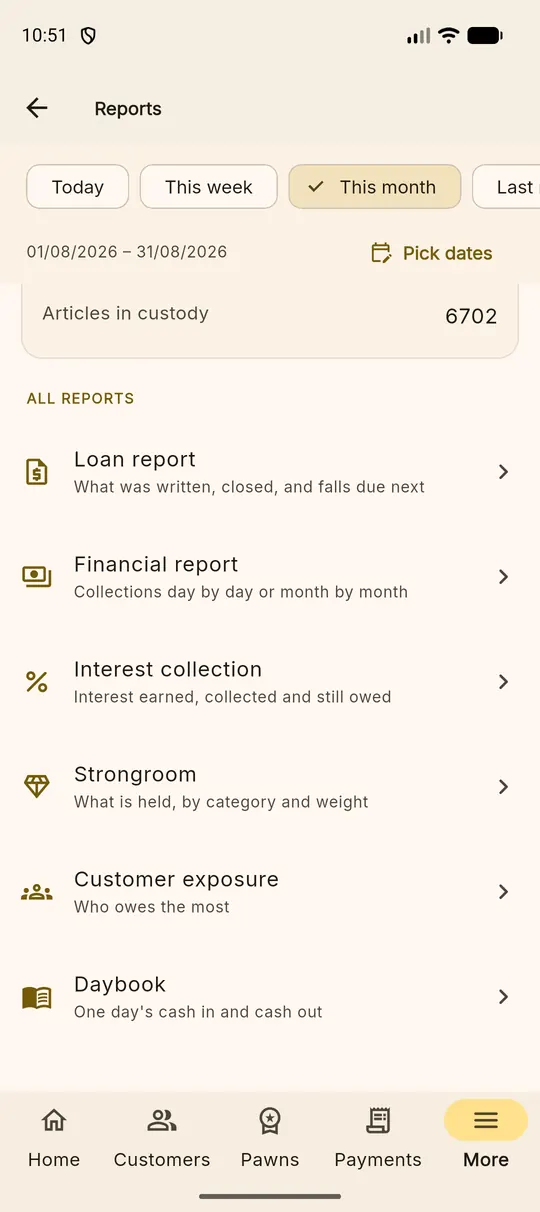
- A date range — Today, This week, This month, Last month, or Pick dates for anything else. Two of the reports describe what the shop holds right now, so dates do not apply to them and they say so.
- Group by day or month — day for a week, month for a year.
- Export — the share icon at the top right sends the report out as CSV, which opens in Excel or goes to your accountant.
Collected means realised Collection figures count money that actually settled. A payment that was reversed stops counting from the moment it was reversed, so the reports never flatter you.
Which report answers which question
| You want to know | Read |
|---|---|
| What did we take in and pay out today? | Daybook |
| How much have we collected this month, and on which days? | Financial |
| How much interest is running, and how much is overdue? | Interest collection |
| What is out on loan right now, and what is late? | Loan book |
| How much gold is in the shop, and of what kind? | Strongroom |
| Which customers owe us the most? | Customer exposure |
Daybook
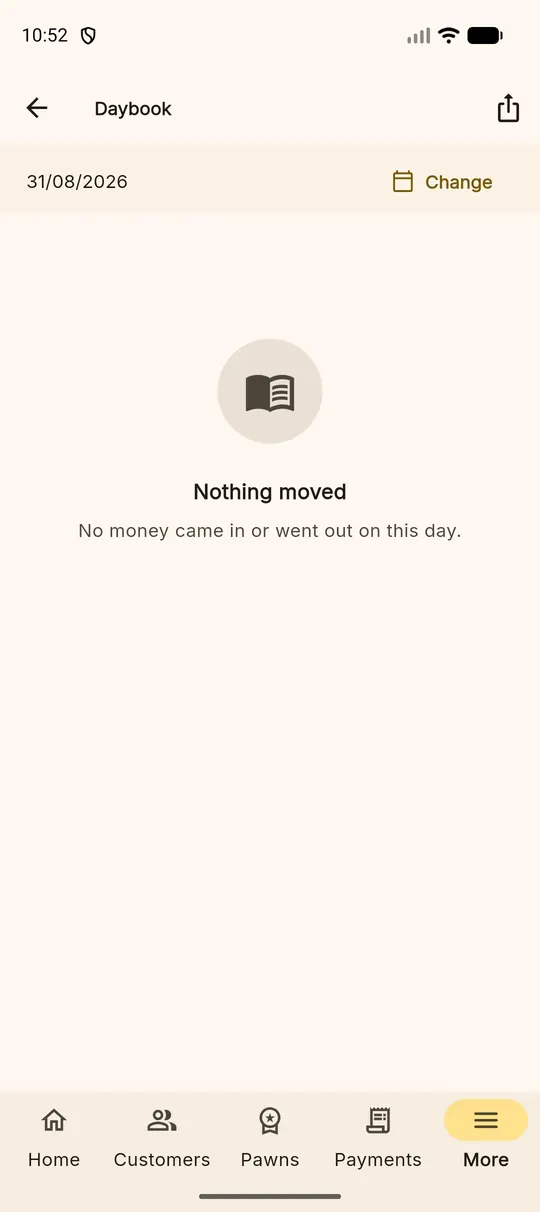
One day, every entry: pledges written, payments taken, redemptions closed, in order. This is the report you read at closing to reconcile the cash box, and the one to print if a partner asks what happened while they were away.
Financial report
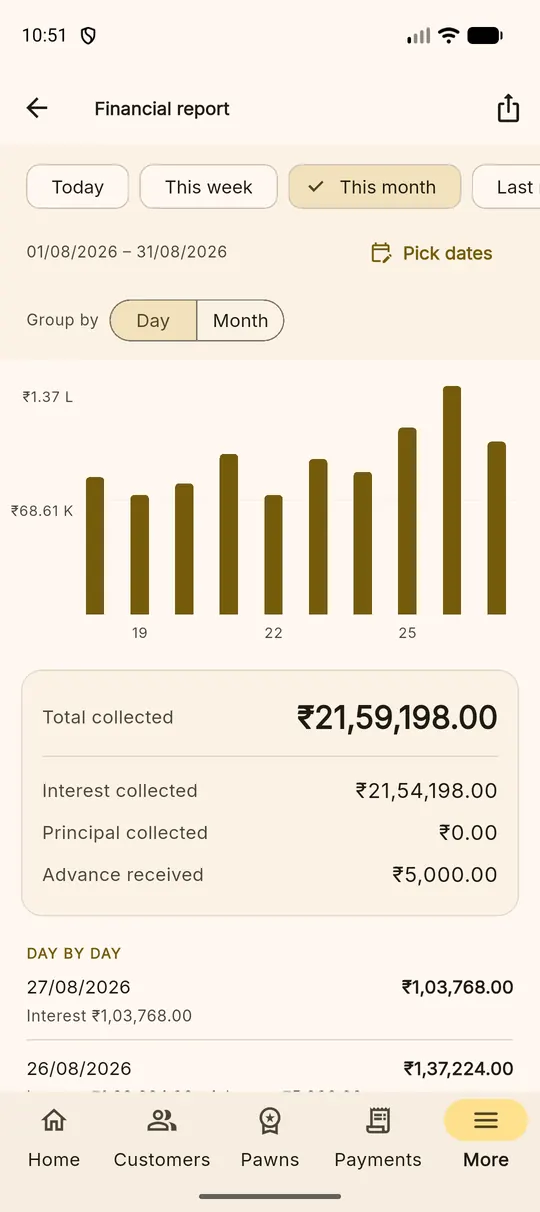
What came in over a period, day by day, with a bar chart above the numbers. The summary card splits the total three ways:
- Interest collected — your earnings
- Principal collected — your money coming back
- Advance received — paid ahead of a due date
Those three add up to total collected. Watching the split matters: a month where principal is high and interest is flat is a month of loans closing, not a month of good lending.
Interest collection
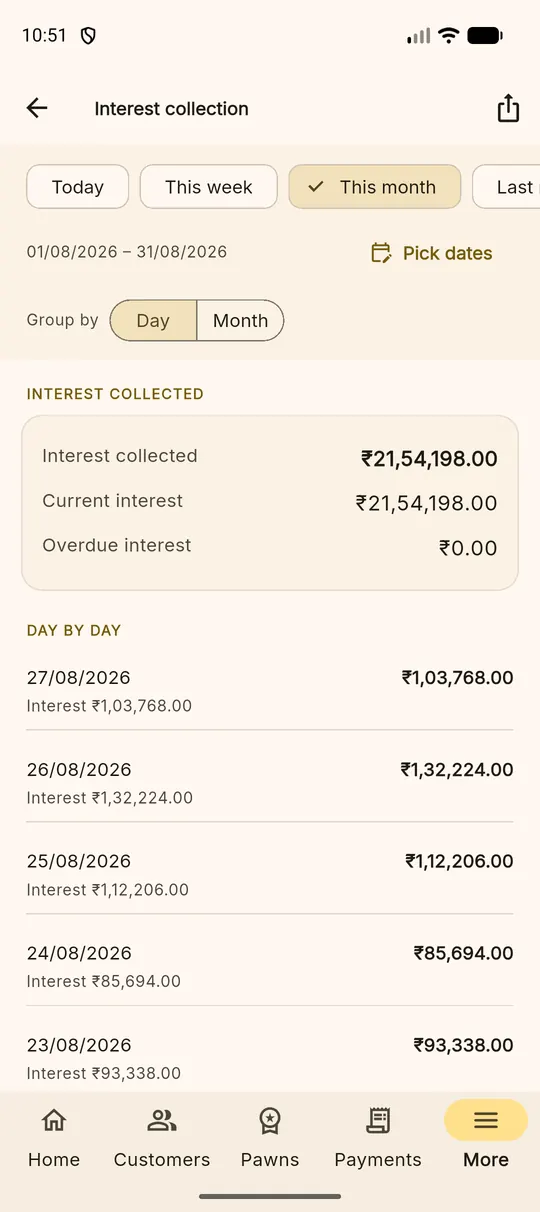
The earnings report. It shows interest collected over the period, then splits what is outstanding into current and overdue interest — the second number is the one to watch. A rising overdue figure means reminders are not working or the maturity dates are too tight for your customers.
Loan book
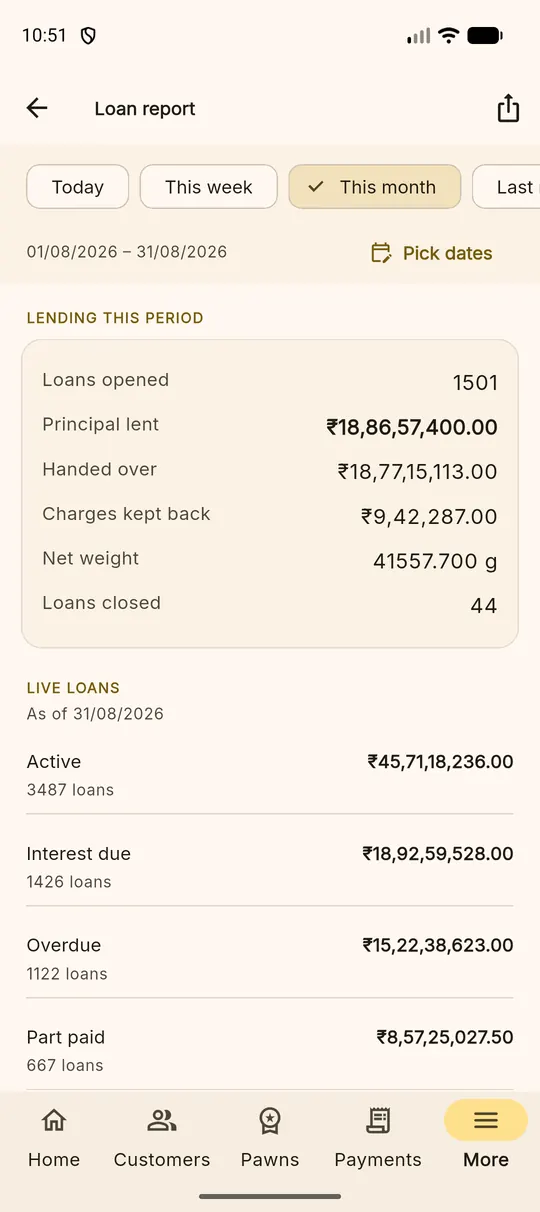
Every live loan, with the totals at the top: how many loans, how much principal is out, and how much of it is overdue. Filters narrow it to active, overdue, matured or closed loans; tap any line to open that loan.
Read this weekly. It is the report that tells you whether the book is growing, and whether the growth is in loans that are being serviced.
Strongroom
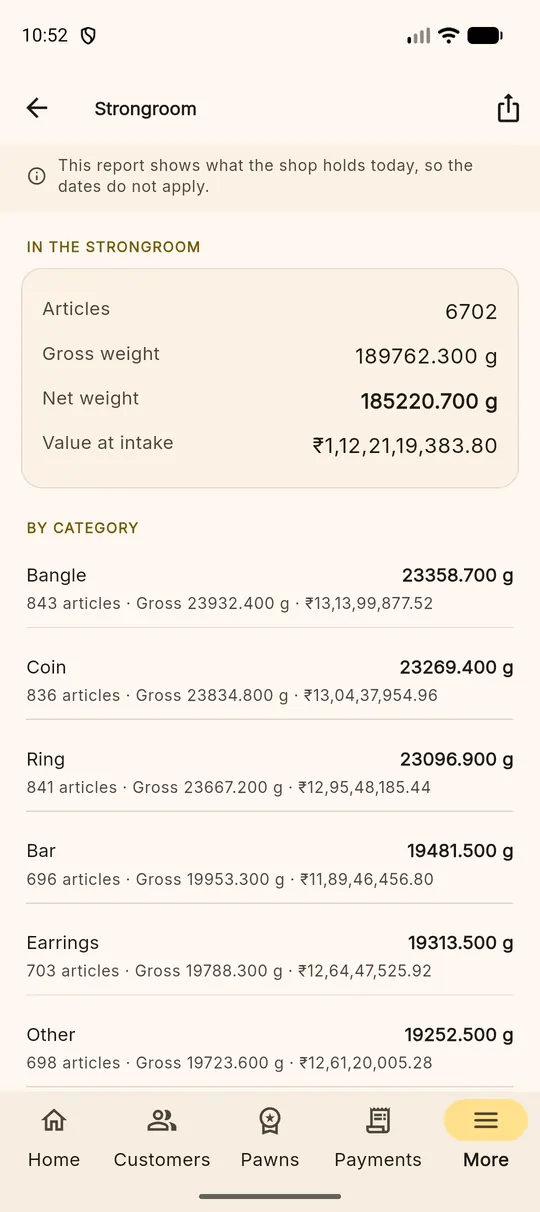
What the shop physically holds today: how many articles, their gross and net weight, and what they were valued at when they came in. Underneath, the same figures broken down by category — bangles, coins, rings, bars, earrings.
Two uses. First, a stock check: the count here should match what is in the lockers. Second, insurance — the value at intake is the number an insurer will ask for.
Customer exposure
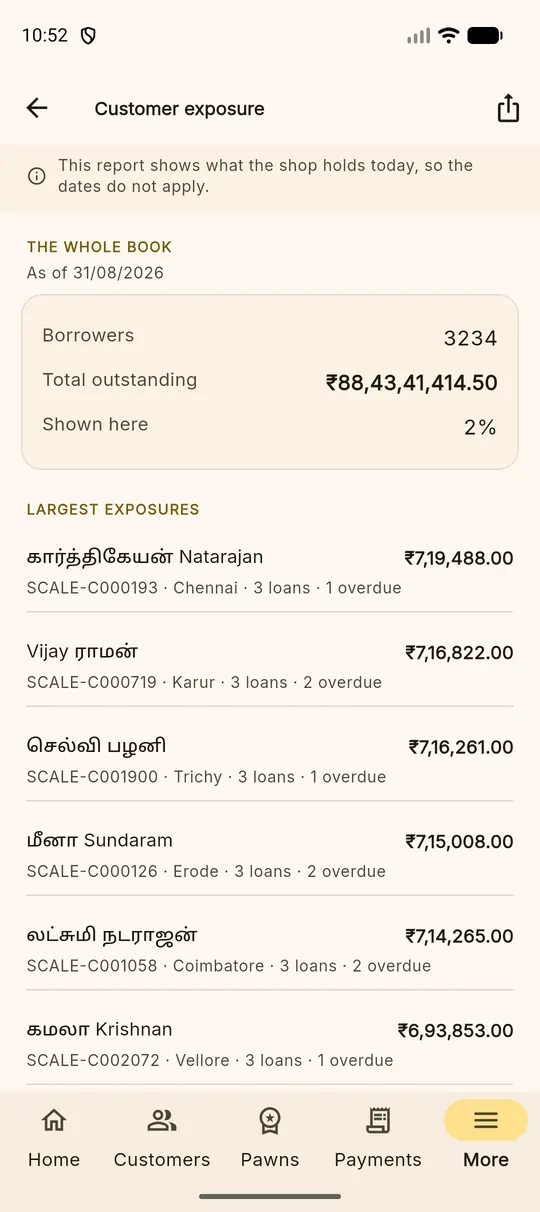
Who owes you the most. The card at the top gives the whole book — how many borrowers, total outstanding — and the list beneath ranks customers by what they carry, with their city, how many loans and how many are overdue.
This is a risk report. A customer with three loans and two overdue is a conversation to have before the fourth loan, not after.
A reading routine that works
| When | Report | Looking for |
|---|---|---|
| Every evening | Daybook | Does the cash box agree with the book? |
| Every week | Loan book | What is overdue, and who to chase |
| Every month | Financial, Interest | Earnings, and whether overdue interest is growing |
| Every quarter | Strongroom, Customer exposure | Stock check, and concentration risk |