 PawnEasy Pro
Home · Pawn broker software
Pawn Broker Software for Indian Pawn Brokers
The parts of a broking business that sit around the counter — branches and staff, the KYC you must hold and protect, the custody trail that settles disputes, and reminders in the language your customer reads.
Built for how broking works in India
A pawn broker is running a business, not a till. There are branches, there is staff who should not all see the same things, there is KYC you are obliged to hold and obliged to protect, and there are customers who need reminding in the language they speak. Those are the parts of pawn broker software that are hard to retrofit, so PawnEasy Pro has them from the start.
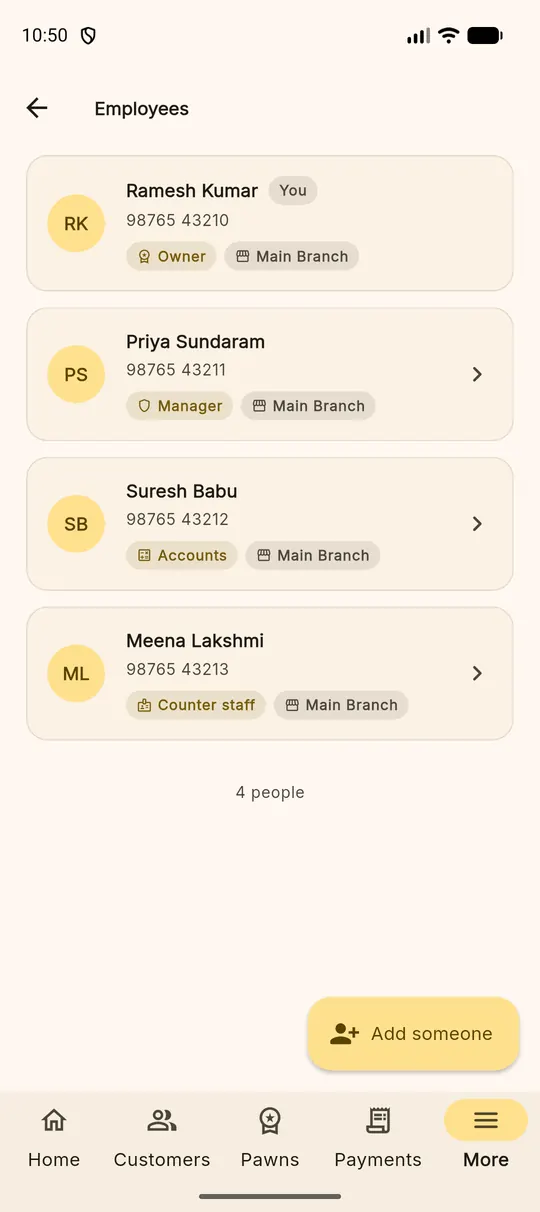
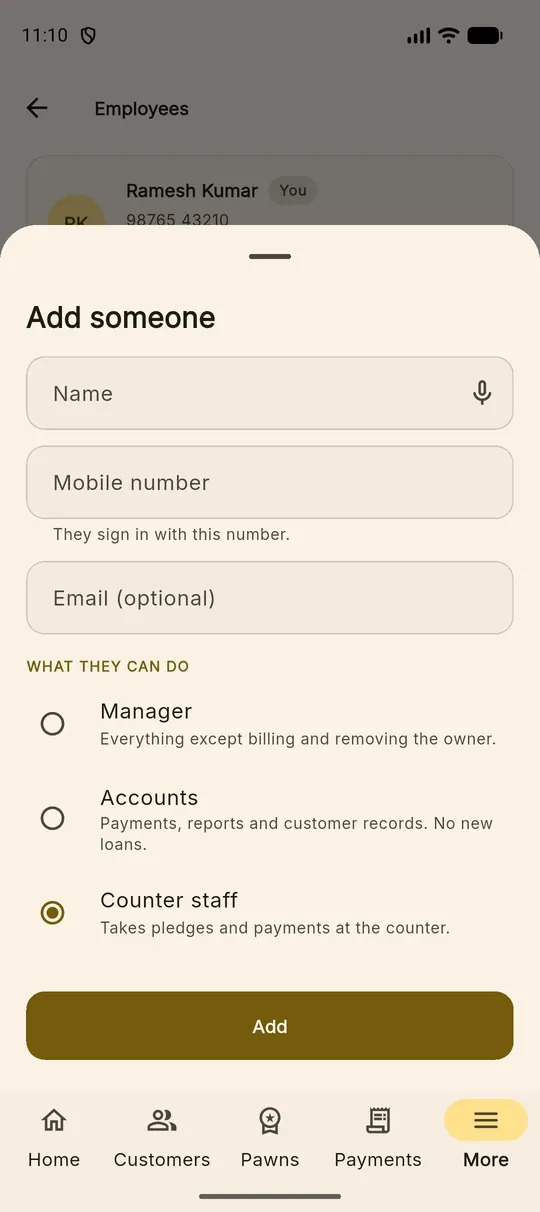
Staff, roles and what each of them can see
Four roles, and a member of staff belongs to a home branch without being walled into it. A counter clerk can write pledges and take payments; only an owner changes the rate board, the schemes or the pricing. Every pledge, payment, reversal and custody move carries the name of whoever did it, which is what makes an end-of-day disagreement a five-second question.
KYC you can hold without carrying the risk
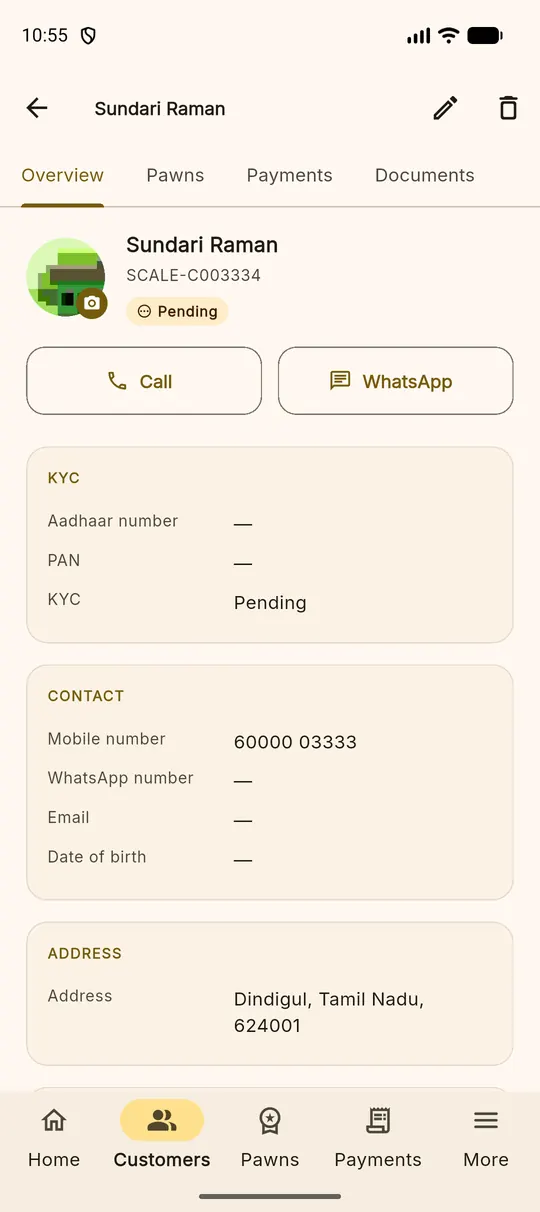
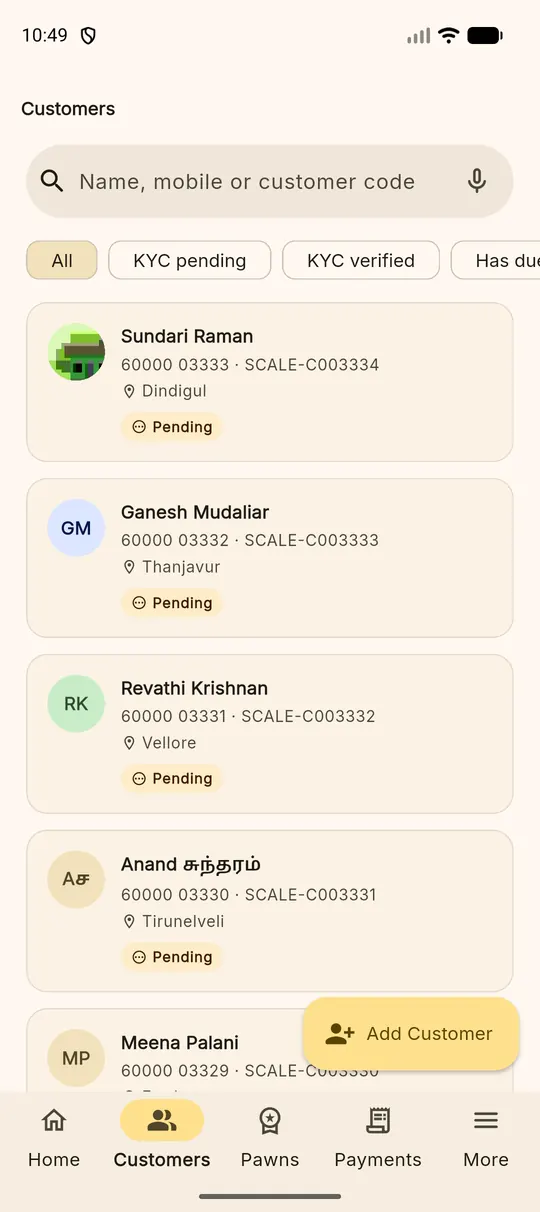
Aadhaar and PAN are encrypted before they are written down. After that the full number is never shown again anywhere in the product — not on screen, not in an export, not through the API. Staff with permission see the last four digits, which is enough to confirm a customer against the document in their hand and not enough to be worth stealing.
The detail of how that is stored is written up in data security, including where the server sits.
Reminders in the customer's own language
Interest due, due today, overdue — the reminders go out over your shop's own WhatsApp number, not a shared gateway, so the message arrives from a number your customers recognise. Templates are yours to edit, in English, Tamil or Hindi, and the schedule is yours to set. A broker who reminds people politely a week early collects more than one who chases a month late.
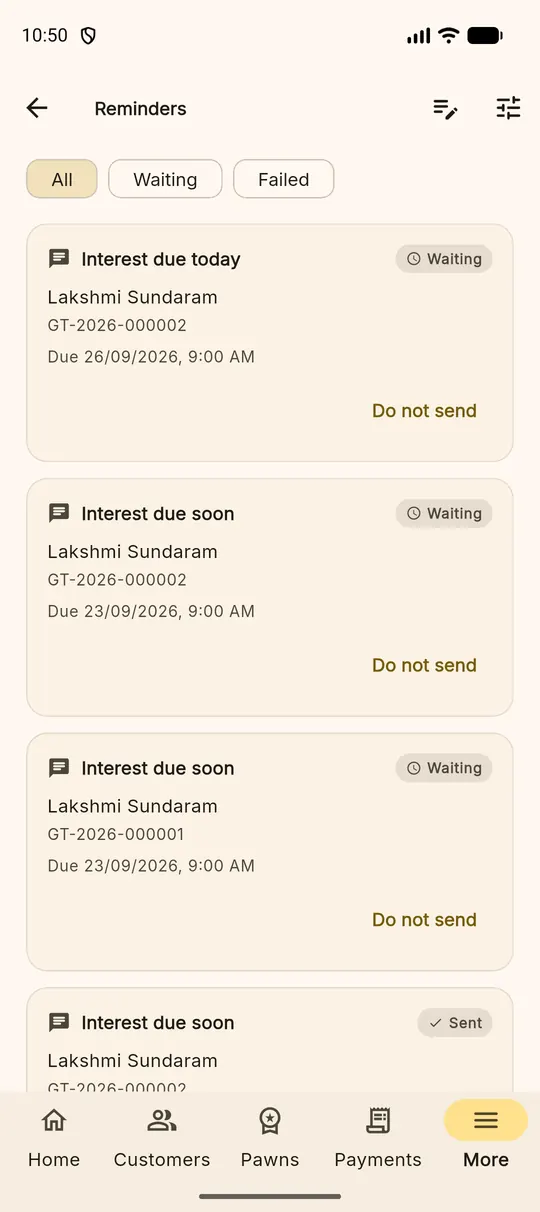
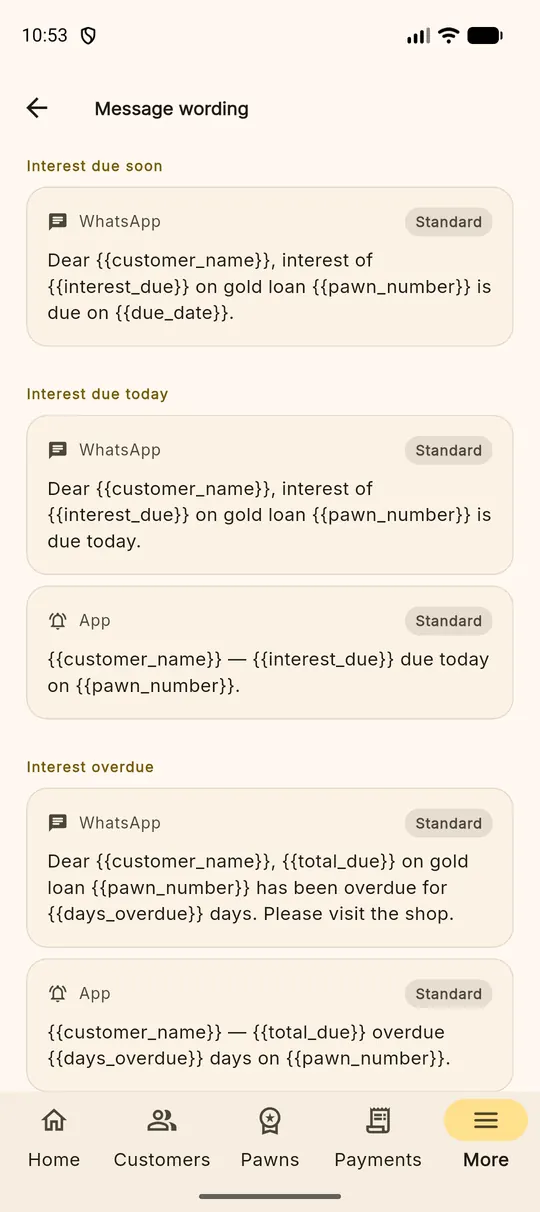
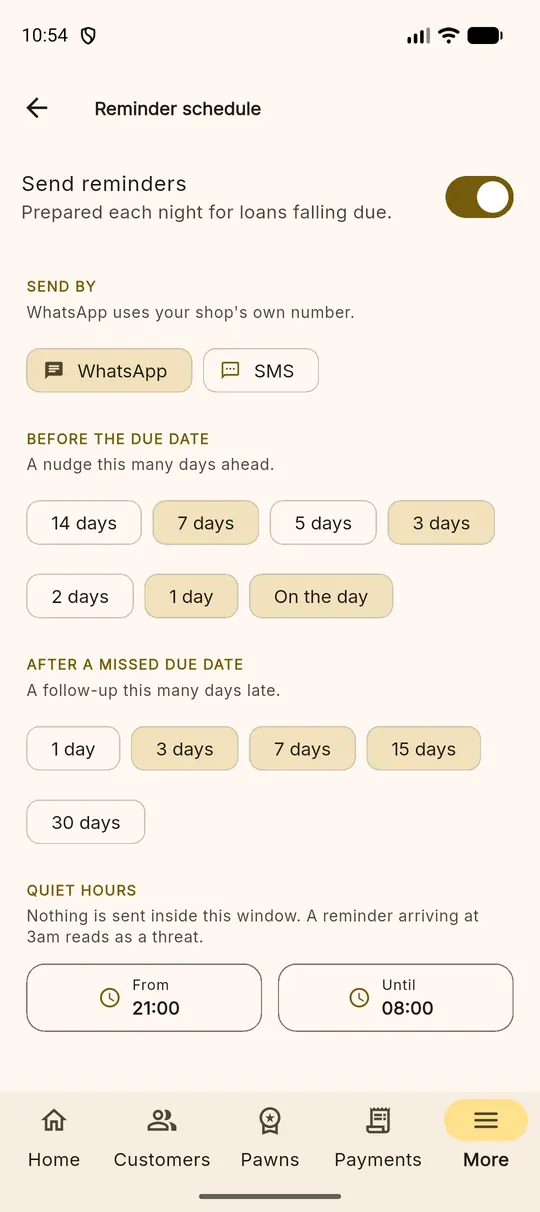
The custody trail is the broker's real protection
Jewellery movements are append-only. Nothing changes location or status without a movement being written, and movements are never edited or deleted. If a piece is disputed a year later, the trail says when it arrived, which locker it sat in, who moved it and when it left. That record is worth more to a broker than any report.
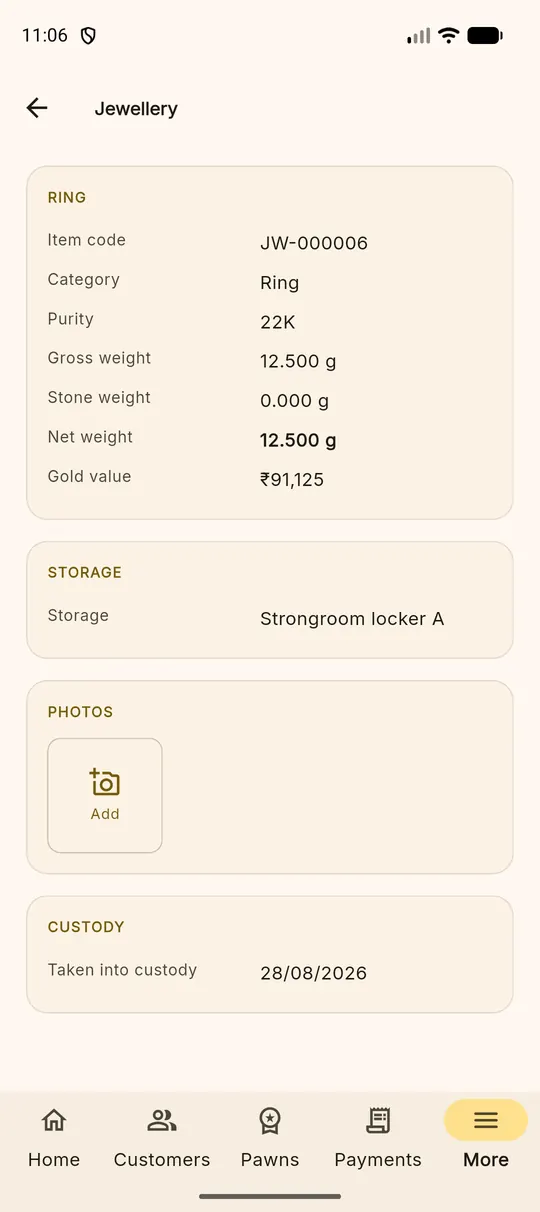
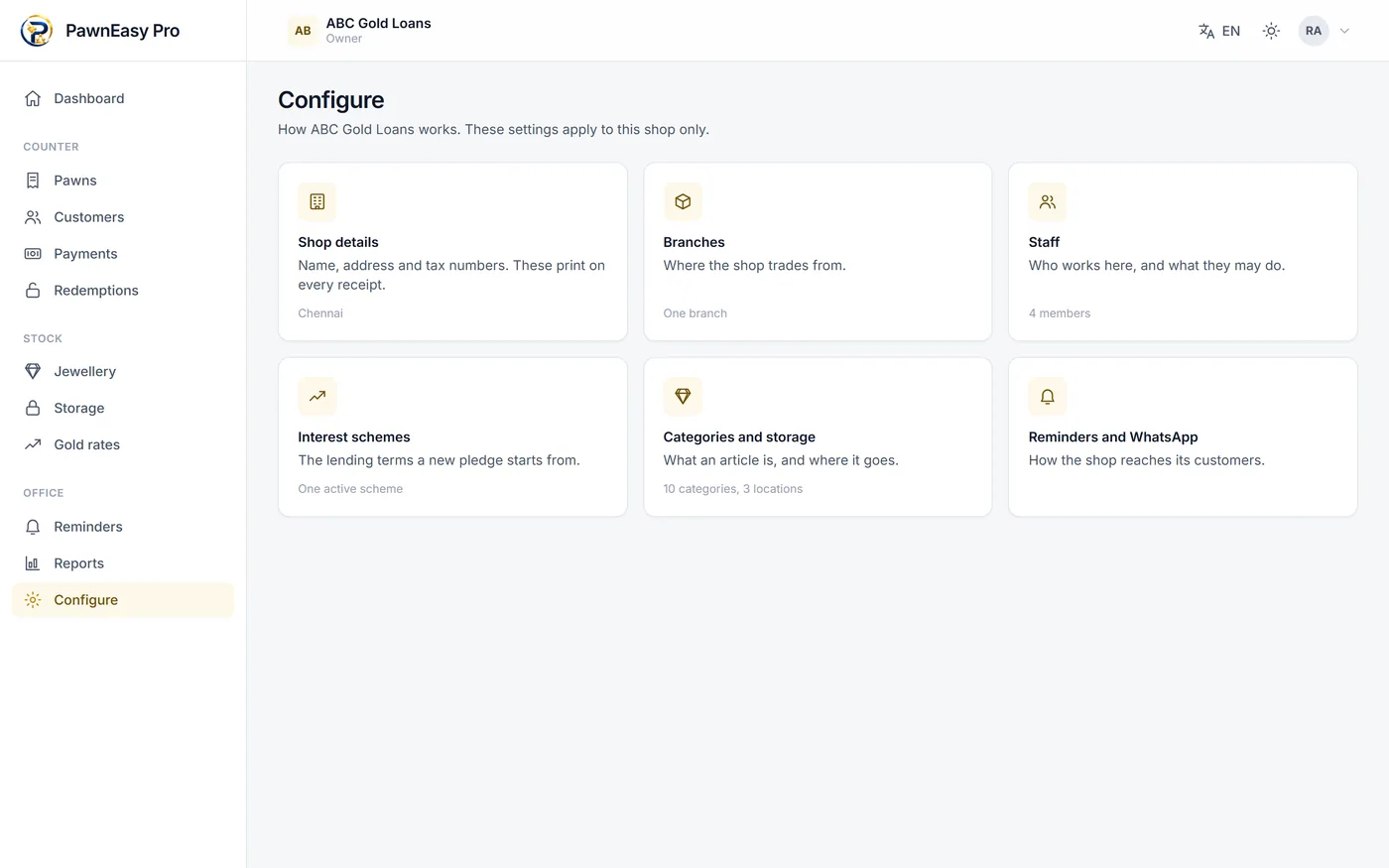
Three languages throughout, on the phone at the counter and the browser at the desk. Receipts print in Tamil where you want them to.
Pawn Broker Software for Small and Multi-Branch Businesses
Most pawn broker software makes you choose early: something simple that cannot grow, or something built for a chain that a one-counter shop will never finish configuring. PawnEasy Pro is the same product either way — what changes is how much of it you switch on.
One branch
A single shop needs none of the branch machinery. You write pledges, take payments and print receipts; the branch exists but you never think about it. Two people can share the shop's subscription without a second licence, because the price is per shop.
More than one branch
Add branches when you open them. Pledges, articles and payments belong to the branch that wrote them, so each shop's day book is its own. A member of staff has a home branch, which is where their work defaults to — it is not a wall, so an owner moving between shops is not locked out of either.
Centralised management
The owner's view spans the company: total principal out, interest accrued, what is overdue and where, and the strongroom position per branch. The same figures on the phone and in the browser, because they are the same books rather than a sync.
Staff roles and permissions
Four roles. A counter clerk writes pledges and takes payments. Only an owner changes the rate board, the interest schemes or the pricing, and only staff you have permitted can see the last four digits of a customer's KYC. Nobody at any level can read a full Aadhaar or PAN number, because it is encrypted before it is stored.
Reporting
Reports filter by branch and period and export to CSV for your accountant. They count money that was actually realised, so a reversed payment stops counting the moment it is reversed.
Audit trail
Jewellery movements are append-only: nothing changes location or status without a movement being written, and movements are never edited or deleted. Payments are reversed with a reason rather than removed. What the book says happened is what happened, which is the part a broker actually needs when a customer disagrees.
Also on this site
The same system, from a different angle
Gold loan software
Rate board per karat, gross and net weight, loan-to-value, and the interest that follows from them.
The counterPawn shop software
The workflow end to end: customer, pledge, article, loan, interest, payment, redemption.
The owner's viewGold loan management software
Portfolio, overdues, interest accrued, strongroom capacity and the day book.
Try it against your own loans
Fourteen days, every feature switched on, no card. Write one real pledge and see whether the interest matches your book.